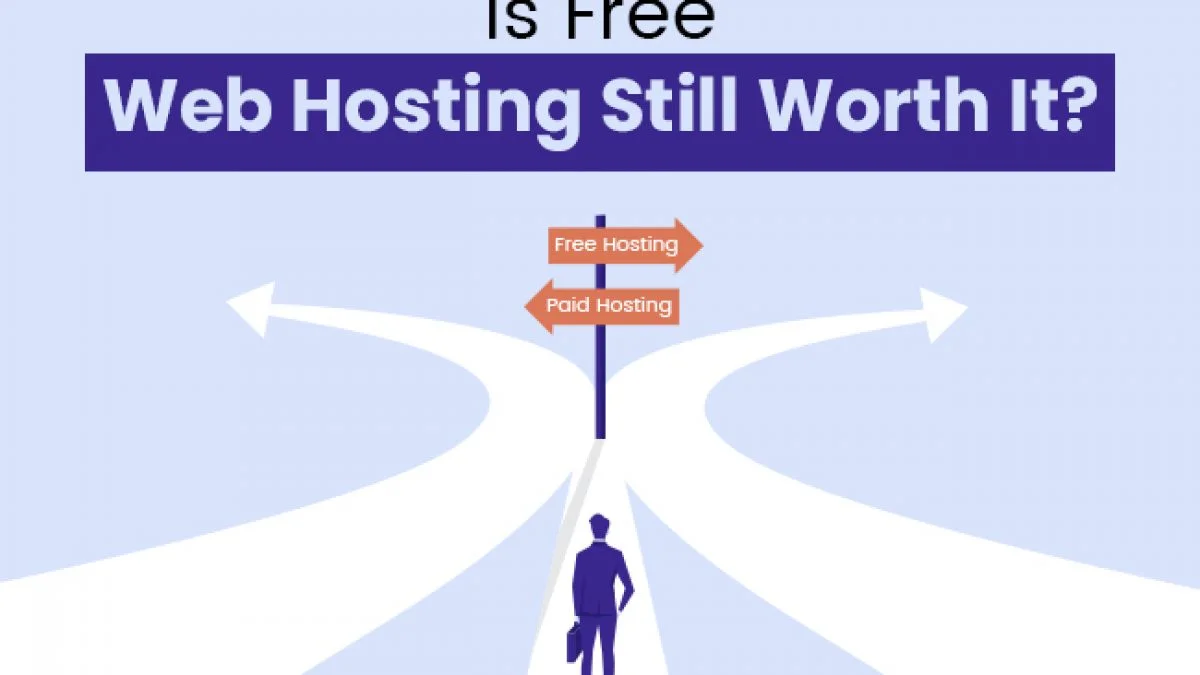
Free web hosting can be useful if you’re a beginner or working on a hobby project, but it comes with clear drawbacks related to speed, storage limits, support, and overall reliability.
While the pros and cons of free hosting are very real — saving money is the obvious win — the trade-offs often include weaker performance, limited control, slower SEO growth, and security concerns.
Options like shared hosting, VPS, or cloud hosting provide better speed, flexibility, and long-term stability for anyone serious about their website.
Introduction

The idea of getting free web hosting without spending a single rupee definitely sounds appealing, especially when you’re just starting out.
But before jumping in, it’s worth stopping to think a little deeper. Is free web hosting a good choice for a business website? What risks come with free website hosting? And most importantly, can free hosting actually support your website in the long run?
According to a Google study, more than half of mobile users leave a website if it takes longer than three seconds to load. Now imagine using free hosting, where slow servers and restricted bandwidth are quite common. Every extra second of delay doesn’t just affect user experience — it can lead to fewer visitors, lower engagement, and lost revenue.
While free hosting sounds attractive on the surface, the reality is more complex. In a time where website speed, SEO, security, and scalability play a huge role in online success, the real question is whether free hosting truly saves money or quietly costs more over time.
So let’s take a closer look at whether free web hosting actually works and whether it’s safe to use free web hosting in 2025.
Who Uses Free Hosting Today?

If you’re asking yourself, “Is free web hosting worth it?” or “Does free web hosting work for real projects?”, the answer depends largely on your goals and how you plan to use your website.
➢ Beginners and Students
Free hosting is still a popular option for beginners who are experimenting for the first time — maybe working on a learning project or just trying things out. In situations like this, free hosting can be a reasonable choice.
There’s no pressure to look professional or meet business standards. It’s simply a way to explore, test, and learn.
➢ Local Groups and Nonprofits
Small clubs, community groups, or nonprofits with little to no technical budget often turn to free hosting. It gives them a basic online presence to share updates, announcements, or event details.
While it’s limited and far from perfect, it can work as a starting point. Many such groups eventually upgrade as their needs grow.
➢ Entrepreneurs Testing Ideas
If you’re testing a business idea or launching a side project, free hosting can help you get something live quickly. A basic landing page or early version of a product can be created without spending anything upfront.
However, once the idea gains traction and people start visiting your site, switching to a more reliable hosting solution becomes almost necessary.
➢ Temporary or Experimental Projects
Sometimes you need hosting for a short-term purpose — a hackathon project, a weekend event, or a private test site. Free hosting works well here.
It’s quick to set up, easy to discard, and suitable when you don’t plan to maintain the site long-term.
➢ Hobbyists and Personal Projects
For personal blogs, photography portfolios, or hobby websites, free hosting may be enough. Performance and scalability aren’t always critical in these cases.
If the goal is simply to share something online without turning it into a business, free hosting often fits the bill.
What are the Risks of free Website hosting?
If you’re wondering whether it’s safe to use free web hosting in 2025, it’s important to understand the compromises that usually come with it.
➢ Small Amount of Disk Space
Most free hosting providers offer very limited storage, often between 500MB and 1GB. That may be enough for a simple site, but it fills up quickly if you use high-quality images, videos, or plan to expand.
➢ Limited Bandwidth
Bandwidth determines how much data visitors can load from your site. Free plans usually cap this heavily, which means even a small spike in traffic can slow your site down or take it offline entirely.
➢ A Subdomain (Not a Custom Domain)
With free hosting, you typically don’t get your own domain name. Instead, your site appears as something like yourname.freehost.com. That’s fine for casual use, but it can hurt credibility, branding, and SEO.
➢ Limited Support or Forum-Based Help
Support is often restricted to forums or outdated documentation. There’s usually no direct help when something goes wrong, which can be frustrating if you’re not technically experienced.
➢ Ads Plastered on Your Website
One of the biggest downsides is forced advertising. Since you’re not paying, hosting companies earn by displaying ads on your site — often without your control. This can look unprofessional and drive visitors away.
➢ Minimal or No Security Features
Most free hosting plans don’t include essential security features like SSL certificates, firewalls, or malware protection. This makes them unsuitable for anything beyond very basic use.
➢ No Backup Facility
Backups are rarely included. A single mistake or server issue can erase your entire site, with no easy way to recover your data.
➢ Lower Uptime Guarantee
Free hosting rarely promises strong uptime. Frequent downtime can harm your traffic, SEO rankings, and reputation.
Why Companies Provide Free Web Hosting?
Free hosting isn’t offered out of goodwill alone — there’s usually a business strategy behind it.
1. Freemium Model – Upsell Later
Providers offer limited free plans with the hope that users will upgrade once their site grows and needs better features.
2. Advertising Revenue
Many free hosts earn money by placing ads on user websites, generating revenue from traffic you bring in.
3. Data Collection
Some providers collect usage data or analytics from free accounts, which may be used for commercial purposes.
4. Brand Awareness
By hosting your site on their subdomain, companies gain visibility and brand exposure.
What You Sacrifice with Free Web Hosting?
While free hosting seems convenient, there are important trade-offs to consider.
1. Risk of the Company Going Away
Free hosting providers may shut down services or remove inactive sites without notice, leaving you with little control.
2. Performance & Speed
Free servers are often overcrowded, leading to slow load times and inconsistent performance.
3. Security & Malware Risks
Without proper security measures, your site is more vulnerable to attacks and data exposure.
4. Outdated Technologies
Free hosts may not keep software updated, limiting compatibility with modern tools and platforms.
5. Lack of Ownership & Privacy
You usually don’t fully own your domain or data, and some providers may use your site for advertising or analytics.
6. Branding & Ads
Forced branding and ads can make your site look unprofessional and damage trust with visitors.
7. Limited Support & No Room to Scale
Help is minimal, and scaling often means migrating to a completely new provider.
8. SEO Growth Challenges
Slow speeds, downtime, and lack of SSL can negatively impact search engine rankings.
For Serious Users, Free Hosting is Actually Paid. How?
Free hosting often costs more than it seems — just not in money.
➢ Time is the Hidden Cost
Managing restrictions, troubleshooting issues, and dealing with limitations eats up valuable time.
➢ It Derails Serious Objectives
Business goals like lead generation or sales suffer when hosting performance is poor.
➢ You Might Be Losing Visitors
Slow load times, ads, and security warnings push visitors away before they engage.
Let’s Hear from Some Of the Users on Reddit On Their Experience of Free Web Hosting!
➢ Unexpected Shutdowns and Data Loss
Users have shared stories of sites being shut down suddenly due to traffic limits, with data lost and no clear recovery options.
➢ Security Breaches That Exposed Millions
Major data breaches in the past exposed millions of user credentials, highlighting serious security risks.
➢ Chronic Downtime and “Sleep Time” Mode
Some free hosting plans forced daily downtime, taking sites offline without warning.
➢ Service Closure Without Notice
Several providers have shut down free services entirely, leaving users scrambling to migrate.
I am Serious about my project. What’s the Alternative?
If free hosting no longer meets your needs, there are more reliable options available.
1. Shared Hosting – Affordable and Beginner-Friendly
Shared hosting offers better performance, a custom domain, and fewer restrictions at a low cost.
2. VPS Hosting – More Power and Flexibility
VPS hosting provides dedicated resources and greater control, suitable for growing sites.
3. Dedicated Hosting – Full Control and Maximum Performance
Dedicated servers offer complete control and high performance for large or high-traffic websites.
4. Reseller Hosting – For Freelancers & Agencies
Reseller hosting allows you to manage multiple client sites under one plan.
Final Point
So, is free web hosting worth it in 2025? It depends on what you’re building.
For learning, hobbies, or temporary projects, free hosting can work. But for business websites, growing platforms, or anything involving user data, free hosting is not recommended.
Your website deserves reliability, speed, and proper support — and that usually means choosing a paid hosting solution.
Frequently Asked Questions
1. Is Free Web Hosting Good for SEO?
Free hosting can be indexed, but slow speeds, lack of SSL, and subdomains often hurt rankings.
2. Does Google Do Free Web Hosting?
Google doesn’t offer traditional free hosting, though tools like Google Sites exist with limited functionality.
3. Can I Use a Custom Domain with Free web hosting?
Some providers allow it, but restrictions and ads usually remain.
4. Are there any performance differences between paid and free hosting?
Yes — paid hosting offers better speed, uptime, and reliability.
5. Is it safe to host sensitive content on free web hosting services?
For sensitive data or professional use, free hosting is generally not safe.