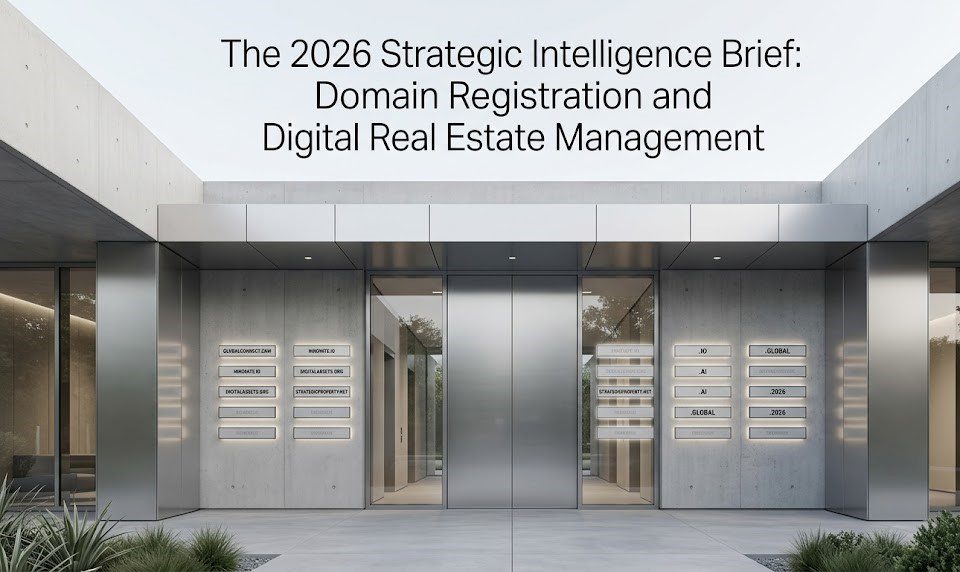
In the continuously expanding digital ecosystem of 2026, securing a Domain name is the foundational act of digital sovereignty. A domain serves as the absolute street address for any online enterprise, routing human-readable text to complex server coordinates. The process of registering this digital real estate has been streamlined by registrars like Namecheap, but the strategic, economic, and security implications of domain ownership remain incredibly complex. This intelligence brief deconstructs the structural mechanics, economic dynamics, and regulatory frameworks governing how individuals and corporations secure their identities on the modern web.

1. Historical Context and Foundational Evolution
The architecture of the internet was not originally designed for human-readable navigation. In the early days of the ARPANET, users relied on numeric IP addresses to locate network nodes. The introduction of the Domain Name System (DNS) in the 1980s revolutionized digital mapping by introducing text-based routing. For decades, the domain registration market was heavily monopolized and notoriously expensive. The creation of ICANN (Internet Corporation for Assigned Names and Numbers) in 1998 decentralized this control, allowing competitive registrars like Namecheap (founded in 2000) to enter the market. By 2026, registering a domain has shifted from a highly technical engineering task to a consumer-friendly retail transaction, though the underlying mechanics of global routing remain the same.
2. Technical Mechanics and Structural Architecture
When a user registers a domain, they are essentially renting a uniquely designated string of characters within a specific Top-level domain (TLD), such as .com, .org, or .io.
- DNS Propagation: Upon registration, the registrar broadcasts the new domain’s nameservers across the global DNS network, effectively drawing a map that points the URL to a specific web hosting server.
- WHOIS Privacy: Historically, registering a domain required publishing the owner’s personal contact data to the public WHOIS database, leading to massive data harvesting and spam. In 2026, advanced registrars like Namecheap deploy permanent “Domain Privacy” proxies at the structural level. This feature masks the registrant’s physical address and email, intercepting and filtering communications to prevent targeted scams and social engineering attacks.
3. Economic Impact and Global Market Dynamics
The macroeconomic structure of domain registration operates on a dual-tier system: the primary retail market and the secondary aftermarket.
- The Primary Market: Standard retail registration (acquiring a previously unregistered domain) is a low-CAPEX investment, typically ranging from $10 to $100 annually. However, registrars must pay wholesale fees to ICANN and the specific TLD registries (like Verisign for .com).
- The Secondary Market: The true economic volatility lies in the aftermarket. Domains act as finite, non-fungible digital assets. Highly competitive, generic single-word domains can trade for tens or hundreds of millions of dollars. The inability to purchase a domain permanently—registrations max out at 10-year terms—creates a perpetual leasing economy where missing a renewal fee can result in a multi-million-dollar asset being instantly seized by automated drop-catching algorithms.
4. Sociocultural and Behavioral Implications
In 2026, a domain name is the ultimate signifier of sociocultural authority and brand legitimacy. The behavioral psychology of web users still heavily favors the legacy “.com” extension as the default marker of trust, despite the availability of thousands of new generic TLDs (gTLDs). Furthermore, the sociology of digital ownership dictates that business owners must retain direct administrative control of their domains. Delegating registration to a third-party IT contractor or web designer introduces a severe “Single Point of Failure.” If the relationship sours or the contractor disappears, the business owner risks losing their entire digital identity, making self-registration via user-friendly platforms a critical best practice.
5. Regulatory, Ethical, and Ecological Frameworks
The domain industry is tightly regulated by ICANN to prevent abuse and intellectual property theft.
- UDRP: The Uniform Domain-Name Dispute-Resolution Policy (UDRP) provides the legal framework to combat Cybersquatting—the unethical practice of registering trademarked names in bad faith to extort the rightful owners.
- GDPR Compliance: The intersection of global privacy laws, particularly the European GDPR, has fundamentally altered how registrars handle user data. Registrars are now ethically and legally mandated to protect registrant information, shifting free domain privacy from a premium upsell to a foundational human right within the digital infrastructure.
6. Competitive Analysis and Strategic Positioning
The 2026 domain registrar battlefield is defined by transparent pricing and bundled security. Legacy registrars often employ predatory pricing models, offering 99-cent domains for the first year, only to lock users into exorbitant renewal fees and charge extra for essential WHOIS privacy. Namecheap’s competitive advantage lies in its anti-monopolistic positioning: offering straightforward renewals (averaging under $14/year for a .com), forever-free domain privacy, and highly responsive 24/7 live chat support. By refusing to gatekeep security features behind paywalls, Namecheap strategically captures the independent creator and small business markets that prioritize ethical billing and simplified UI.
7. Predictive Modeling: The Future of Digital Addressing (2026–2030)
Looking toward 2030, predictive models indicate a structural fracturing of the traditional DNS architecture. As decentralized Web3 and blockchain-based domains (like .eth or .crypto) gain traction, users will demand cross-compatibility between traditional ICANN-regulated domains and decentralized wallet addresses. Furthermore, AI-driven domain generation will become standard. Instead of humans manually searching for available names, generative AI will instantly analyze a brand’s ethos, cross-reference global trademark databases, and procure a highly brandable, mathematically optimal domain name in milliseconds. Despite these advancements, the fundamental leasing structure—renewing every 1 to 10 years—will remain the undisputed economic engine of the internet.
Conclusion
The strategic verdict for 2026 is absolute: registering a domain name is a non-delegable executive action that defines a brand’s operational security. It is the digital equivalent of holding the deed to a physical storefront. The technical mechanics of DNS routing and the volatility of the domain aftermarket require users to prioritize registrars that offer transparent long-term economics and built-in security. By utilizing a platform like Namecheap, which standardizes free WHOIS privacy and caps renewal inflation, businesses can insulate themselves from both predatory billing and digital identity theft. In an era where digital real estate is exponentially more valuable than physical land, securing and fiercely guarding your domain name is the premier directive of modern enterprise management.
Also Read : Rad Web Hosting Review (2025) — Affordable, Flexible Hosting Options