


When you start a website, avoiding common web hosting mistakes can save you time, money, and frustration. Many beginners focus on design and content, but choosing the wrong hosting provider or plan can affect your site’s performance, security, and reliability from day one. In this article, we walk through key pitfalls first-time website owners often make with their web hosting, and how you can steer clear of them.
Choosing the Wrong Hosting Provider
One of the first mistakes beginners make is selecting a hosting provider based solely on price or brand name. Not all hosts deliver the same quality of service, uptime reliability, or support. Before choosing a provider, read reviews and check performance metrics like uptime guarantees and customer support responsiveness. The right host should deliver stable performance and dependable support for your specific needs.
Picking an Inappropriate Hosting Plan
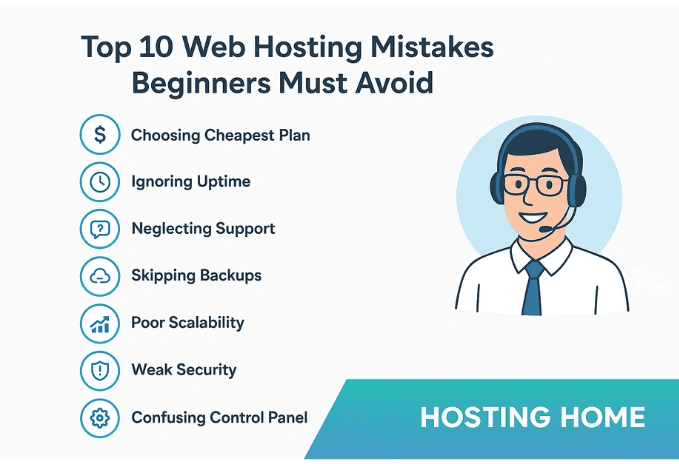
Once you choose a provider, the next step is selecting the right hosting plan. Beginners often choose the cheapest plan available without considering how their website will grow or what resources it needs. A plan that is too limited can lead to slow performance, data loss, or frequent downtime. Consider factors such as expected traffic, content type, and required features before deciding.
Ignoring Security Features
Security is a crucial part of web hosting that beginners often overlook. Features like SSL certificates, firewalls, and malware protection help safeguard your site from hackers and data breaches. Losing data or falling victim to an attack can have long-term consequences for your site and reputation. Always ensure that your hosting plan includes essential security tools or supports easy integration of third-party security services.
Overlooking Backup Systems
Another mistake is not setting up regular backups. Backups are your safety net if something goes wrong — whether due to an update error, server problem, or cyber attack. Beginners sometimes rely too heavily on their host to manage backups automatically, but it’s best practice to verify backup schedules and keep copies in separate storage.
Failing to Monitor Site Performance
Monitoring your website’s performance regularly helps you catch issues early, such as slow loading times or server errors. Tools for uptime monitoring and performance tracking can alert you to problems before they affect user experience. Neglecting these checks can allow small issues to become major disruptions.
Final Thoughts
Web hosting mistakes are common among beginners, but they are avoidable with a bit of research and planning. Choosing a reliable provider, picking the right plan, securing your site, setting up backups, and monitoring performance will help you build a stronger foundation for your website. By focusing on these hosting tips, you can avoid costly errors and support your site’s long-term success.