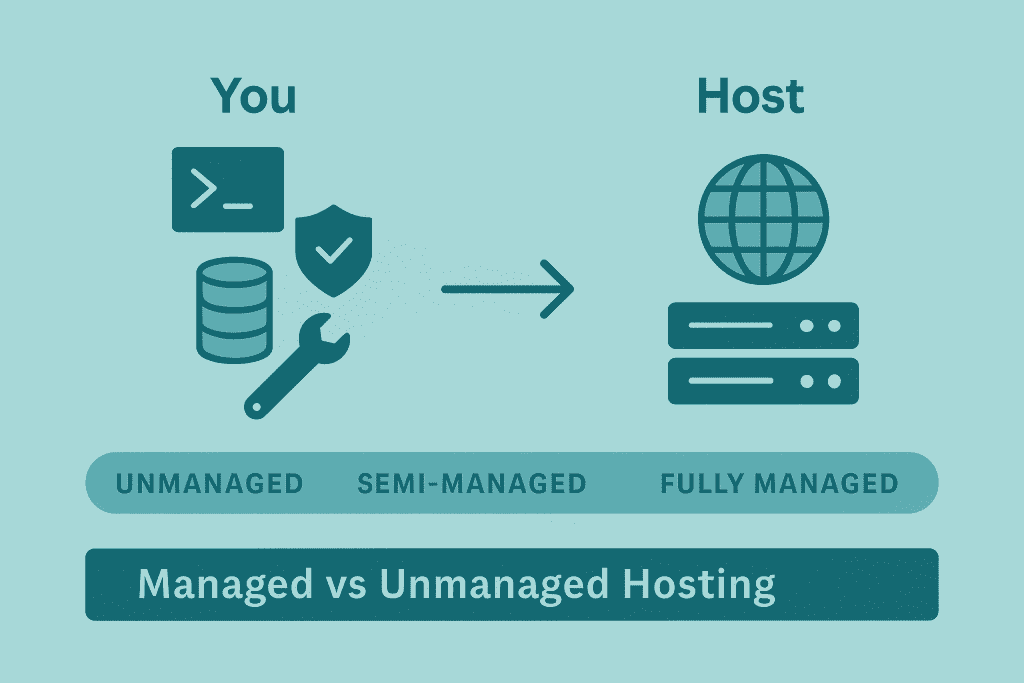
Picking the right hosting solution can feel overwhelming, especially when you’re staring at terms like “managed” and “unmanaged” without really knowing what they mean in practice. Here’s the truth—this decision can make or break your website’s performance, security, and your own sanity. Get it wrong, and you’re either overpaying for features you don’t need or drowning in technical tasks you never signed up for.
Whether you’re launching your first blog or scaling a growing business, understanding the real differences between these two hosting models will save you headaches down the road. Let’s cut through the jargon and figure out which option actually fits your situation.
Quick Refresher: What Even Is Web Hosting?
Before we dive into the managed versus unmanaged debate, let’s make sure we’re on the same page about hosting itself.
Think of web hosting as renting space for your website to live. When you build a site, all those files—your images, text, code, everything—need to be stored somewhere. That somewhere is a server, which is basically a really powerful computer that never sleeps. It runs around the clock so that whenever someone types your domain into their browser, your website loads up.
Now, hosting comes in different flavors. You’ve got shared hosting, VPS, dedicated servers, cloud hosting—the list goes on. Each offers varying levels of control, performance, and price points. But when we talk about managed versus unmanaged, we’re usually dealing with VPS, dedicated, or cloud setups. The core question is simple: who handles the technical stuff? You or your hosting provider?
Your answer depends on three things—your budget, your technical chops, and what you’re actually trying to accomplish with your website.
What Does Managed Hosting Really Mean?
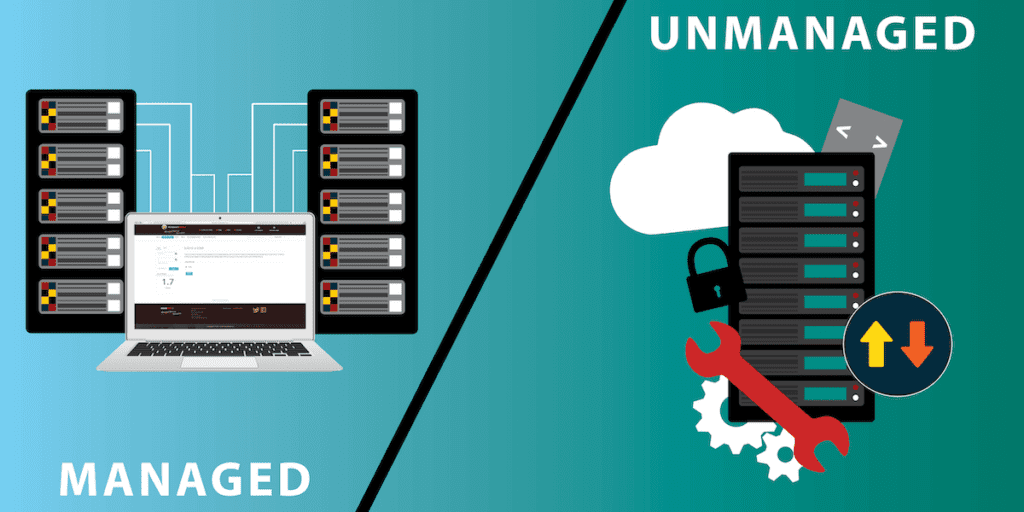
Managed hosting is essentially the “done for you” approach. Your hosting provider takes care of almost everything on the technical side. Server setup? They’ve got it. Software updates? Handled. Security monitoring, backups, troubleshooting? All covered.
You’re paying a premium here, no doubt about it. But what you get in return is peace of mind. You can focus entirely on running your business or creating content instead of worrying about whether your server patches are up to date or if some vulnerability just got exploited.
Picture this: you run an online store, and Black Friday is approaching. Traffic’s about to explode. With managed hosting, your provider automatically scales resources to handle the surge. If something breaks at 3 AM, their team fixes it—not you. It’s like having an IT department on standby without actually hiring one.
This setup works beautifully for people who either don’t have technical skills or simply don’t want to spend their time on server maintenance. Small business owners, bloggers, anyone who’d rather grow their brand than tinker with configurations—managed hosting was built for you.
The Good Stuff About Managed Hosting
You don’t need to be technical. Support teams are available 24/7 to handle issues. Something breaks? Call them. Done.
Security is baked in. Providers actively monitor for threats, handle SSL certificates, run malware scans, and keep your site protected without you lifting a finger.
Updates and backups happen automatically. Your site stays current and recoverable without you scheduling anything or remembering to do it manually.
Performance is optimized out of the box. Servers come configured for speed, often with CDNs and caching already set up.
The Not-So-Great Parts
It costs more. Plans typically range from $10 to $500+ monthly depending on what you need. That adds up.
You sacrifice some control. Want to install custom software or tweak server settings? Some providers won’t let you, or they’ll limit what you can do.
Power users might feel restricted. If you know your way around servers, the guardrails can feel frustrating.
What About Unmanaged Hosting?
Unmanaged hosting flips the script entirely. The provider keeps the server running—that’s about it. Everything else falls on your shoulders. Setup, software installations, security configurations, updates, backups, performance optimization—it’s all you.
The tradeoff? It’s significantly cheaper. And you get complete control over your environment. Want to install a specific database version or run a custom framework that managed hosts don’t support? No problem. Your server, your rules.
Developers love this. If you’re building a custom application or need specific tools that typical hosting environments don’t offer, unmanaged hosting gives you the freedom to set things up exactly how you want them.
But let’s be real—this isn’t for everyone. You’ll need actual technical skills, or at least the time and willingness to learn. Configuring firewalls, troubleshooting mysterious errors, optimizing databases—these tasks eat hours every week. If that sounds exhausting rather than exciting, unmanaged probably isn’t your path.
Why Unmanaged Hosting Can Be Great
Your wallet will thank you. Plans can start as low as a few dollars per month, sometimes even less.
Total control is yours. Install whatever you want, configure however you like, experiment freely.
Maximum flexibility. Custom setups, unusual software stacks, niche requirements—nothing’s off the table.
You’ll learn a ton. Managing your own server teaches valuable skills in security, optimization, and troubleshooting.
The Downsides You Should Know
Support is minimal or nonexistent. Server crashed? Got hacked? You’re solving it yourself.
Security becomes your full-time job. Forget to update something? That’s a vulnerability waiting to be exploited.
Time investment is real. SSL setup, backup configurations, database optimization—expect to spend hours weekly on maintenance.
Side-by-Side: How Do They Actually Compare?
Let me break this down simply:
| What You’re Looking At | Managed Hosting | Unmanaged Hosting |
|---|---|---|
| Monthly Cost | $10 to $500+ | $1 to $100 |
| Technical Support | Round-the-clock expert help | Little to none |
| Who Manages the Server | Your provider handles it | You handle everything |
| Security Approach | Proactive monitoring included | Entirely your responsibility |
| Customization Options | Limited to what provider allows | Complete freedom |
| Best Suited For | Beginners, businesses, high-traffic sites | Developers, tech experts, custom projects |
Who Should Choose Managed Hosting?
This option makes sense when convenience matters more than cost savings. A few examples:
Local businesses with online presence. Say you own a bakery with an ordering system on your website. You can’t afford downtime during the Saturday morning rush. Managed hosting keeps things running smoothly without requiring you to become a server admin.
Bloggers and content creators. You’re focused on writing, photography, or video—not configuring databases. Automatic updates and backups let you create content without worrying about the technical backend.
E-commerce stores. When you’re handling customer payment information, security isn’t optional. Managed hosts typically include PCI compliance, DDoS protection, and other safeguards that would take serious expertise to implement yourself.
Who Should Go Unmanaged?
If you’ve got technical skills—or you’re eager to develop them—unmanaged hosting opens up possibilities. Consider it if you’re:
A developer building custom applications. You need root access to install specific frameworks, databases, or tools. Managed environments often can’t accommodate these requirements.
A startup with in-house tech talent. Your team already knows server management. Why pay extra for services you can handle internally?
A hobbyist running passion projects. Hosting a game server for friends? Experimenting with new technologies? Unmanaged hosting lets you tinker without restrictions—and saves money in the process.
Making Your Decision: Questions That Actually Help
Don’t overthink this. Ask yourself a few straightforward questions:
Do you have technical skills or access to someone who does? If the answer is no, managed hosting is the safer bet.
What’s your budget look like? Managed costs more upfront but saves time. Unmanaged saves money but demands hours of your attention.
How critical is uptime for your site? Running an e-commerce store where every minute of downtime costs sales? Managed reliability is probably worth the investment.
Do you need custom software or configurations? Unmanaged hosting gives you freedom that managed environments simply can’t match.
Here’s a real-world example: a nonprofit running a donation portal should almost certainly choose managed hosting. Security and uptime are non-negotiable when people are trusting you with their payment information.
Meanwhile, a freelance developer building a portfolio site might lean toward unmanaged hosting. It saves money, and the hands-on experience with server management looks great on a resume.
Can You Switch Between Them Later?
Absolutely. Most providers make it possible to change plans as your needs evolve.
Moving from unmanaged to managed typically involves backing up your site and databases, signing up for the new plan, then migrating your data over. Many providers offer tools or support to help with this transition.
Going the other direction—from managed to unmanaged—requires more preparation. Before making that switch, make sure you’re actually ready to handle server management yourself. If not, hire someone who can help, at least initially.
Bottom Line
Managed hosting takes the technical burden off your plate so you can focus on what you actually care about. Unmanaged hosting gives you complete control and costs less, but demands real technical investment.
Neither option is universally better. It comes down to your specific situation—your budget, your skills, and your goals.
Not sure which way to go? Start with managed hosting. It’s the lower-risk choice for most people. As you grow more comfortable or your needs change, you can always transition to unmanaged hosting later.
Whatever you choose, prioritize security and reliability above everything else. Your website’s success literally depends on it.
Common Questions People Ask
What hidden costs come with unmanaged hosting?
The sticker price is lower, but expenses add up elsewhere. Software licenses, security tools, and potentially lost revenue from downtime or breaches you didn’t prevent—these costs aren’t obvious until they hit you.
Can I upgrade from unmanaged to managed hosting later?
Yes, most providers allow this. You’ll need to back up your data and work through their migration process, but it’s definitely doable. Check with your specific provider about any fees involved.
Is managed hosting actually worth paying more for?
For most people, yes. The time you save and the professional support you receive often justify the higher cost. Plus, you’re reducing the risk of technical disasters that could cost far more than the price difference.
Can beginners handle unmanaged hosting?
Technically, yes—but it’s a steep learning curve. Mistakes can lead to security vulnerabilities or extended downtime. Unless you’re committed to learning server administration, managed hosting is the smarter starting point.
Is there a middle ground between these options?
Some providers offer semi-managed hosting, where they handle core server maintenance while you manage your applications. It’s a reasonable compromise if you want some control without full responsibility.