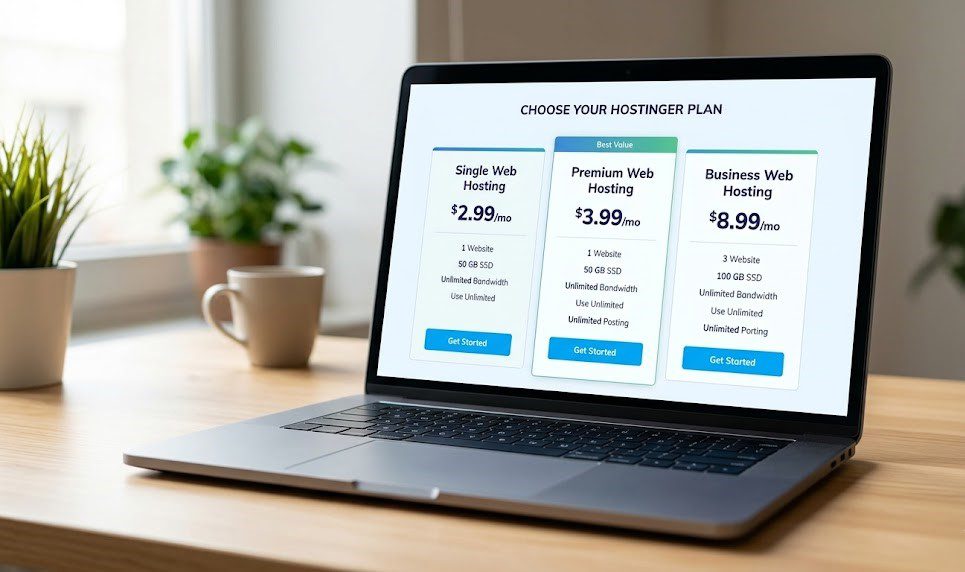
In the digital economy of 2026, securing reliable, scalable web infrastructure is a foundational requirement for personal branding, e-commerce, and enterprise operations. Hostinger has emerged as a dominant global provider, servicing over 3 million users by offering a highly tiered ecosystem of hosting solutions. This intelligence brief deconstructs the architectural differences, economic trade-offs, and strategic deployment of Hostinger’s Shared, Cloud, and Virtual Private Server (VPS) hosting plans.

Technical Architecture: Hosting Tiers
Selecting the correct hosting environment requires matching the project’s data load and traffic velocity with the appropriate server architecture. Hostinger bifurcates its services into three primary structural tiers:
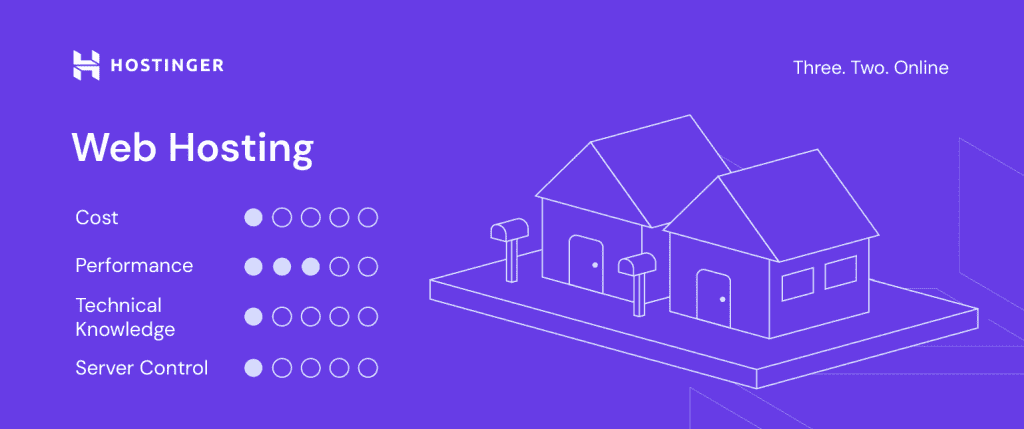
- Web Hosting (Entry to Medium Scale): Engineered for blogs, portfolios, and small businesses. This shared environment is highly cost-effective but resources are distributed among multiple users.
- Capabilities: Supports 1 to 300 websites, utilizing 50GB SSD up to 200GB NVMe storage.
- Security: Includes unlimited free SSL certificates and automated weekly or daily backups depending on the tier (Single, Premium, Business).
- Cloud Hosting (Large-Scale Projects): Utilizes virtualization technology across a network of physical servers. If one hardware node fails, another instantly assumes the load, ensuring maximum uptime.
- Capabilities: Features dedicated resource allocation (3GB to 12GB RAM) and 200GB to 300GB NVMe storage. Bundled with a free Content Delivery Network (CDN) to accelerate global page load speeds.
- VPS Hosting (Dedicated Scaling): The highest level of control, utilizing KVM (Kernel-based Virtual Machine) technology. A single physical server is strictly partitioned, granting the user isolated, dedicated resources.
- Capabilities: Highly scalable, ranging from 1 vCPU/4GB RAM up to 8 vCPU/32GB RAM. It operates entirely on Linux OS, designed for advanced developers running complex, resource-heavy web applications.

Operational Mechanics and User Experience
To capture market share from competitors, Hostinger has heavily invested in reducing the technical friction associated with web development:
- AI-Powered Website Builder: Reduces the reliance on external developers by providing an intuitive, drag-and-drop interface powered by artificial intelligence. This allows non-technical operators to deploy functional websites rapidly.
- Business Email Integration: A dedicated email architecture (e.g., Business Starter at ₹39/mo or Premium at ₹79/mo) enhances brand credibility, providing 10GB to 50GB of isolated email storage per mailbox.
Economic Impact and Pricing Logistics
From a microeconomic perspective, Hostinger utilizes an aggressive introductory pricing model (Capital Expenditure – CAPEX) with standardized renewal rates (Operational Expenditure – OPEX).
- The Shared Advantage: Base plans initiate at an exceptionally low ₹69/month, making market entry frictionless for startups. However, administrators must calculate long-term budgets based on the renewal rate (₹179/month).
- The Value Bundle: Hostinger offsets OPEX by bundling historically expensive external services—such as SSL certificates, custom domain registration, and CDN access—directly into their mid-to-high-tier plans (Cloud and Business configurations) at no additional cost.
Conclusion
The strategic verdict for 2026 is that infrastructure selection must strictly align with operational reality. Deploying a VPS for a low-traffic personal blog is a catastrophic waste of capital, just as running a high-volume e-commerce platform on basic Shared Hosting guarantees operational failure during traffic spikes. Hostinger provides a highly fluid, scalable pipeline. Operators should initiate projects on the lowest viable tier (Premium or Business Web Hosting) and upgrade linearly into Cloud or VPS architectures only when sustained traffic and data processing metrics demand dedicated resources.
Also Read : Hostwinds Review 2025: Pricing, Performance, Security & Real User Experience